To scientifically formulate the University’s 15th Five-Year Development Plan, benchmark advanced practices of top-tier foreign studies universities nationwide, deepen inter-university collaborative development, and advance the connotative and high-quality development of the university, a delegation led by University Party Secretary Qian Yingwei conducted special research and exchange visits to Beijing Foreign Studies University and Xi’an International Studies University from July 2 to 4. Yang Hui and Peng Wenzhao, heads of the University’s 15th Five-Year Plan drafting team, accompanied the delegation.
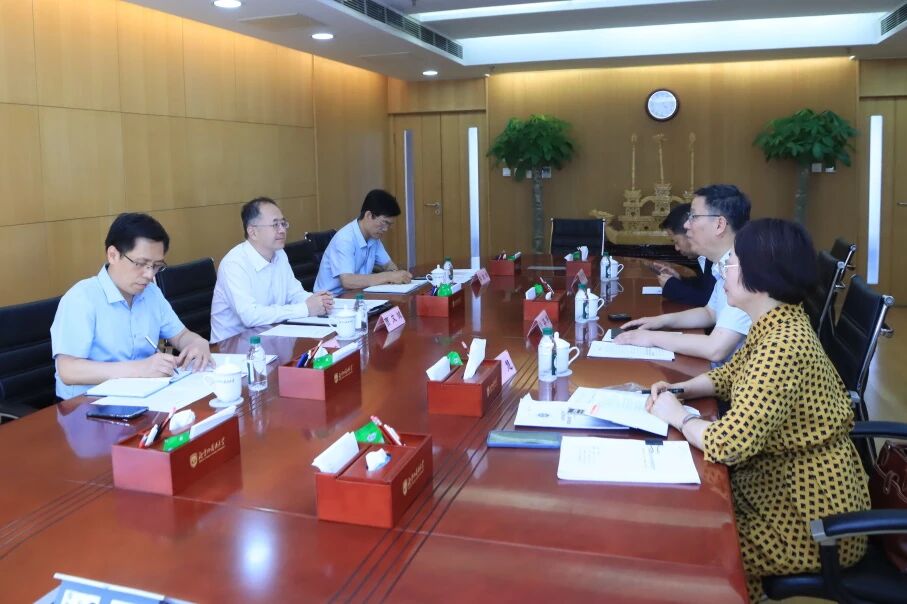
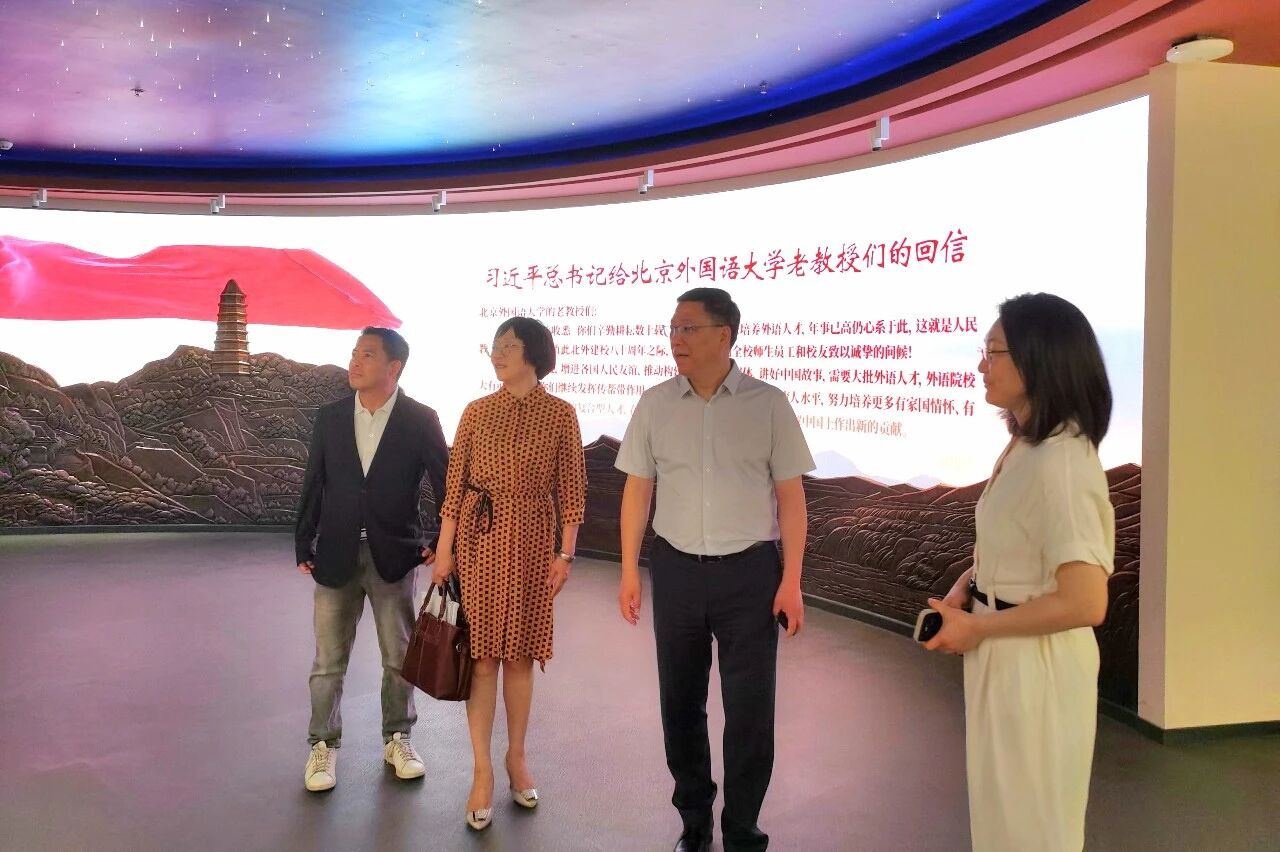
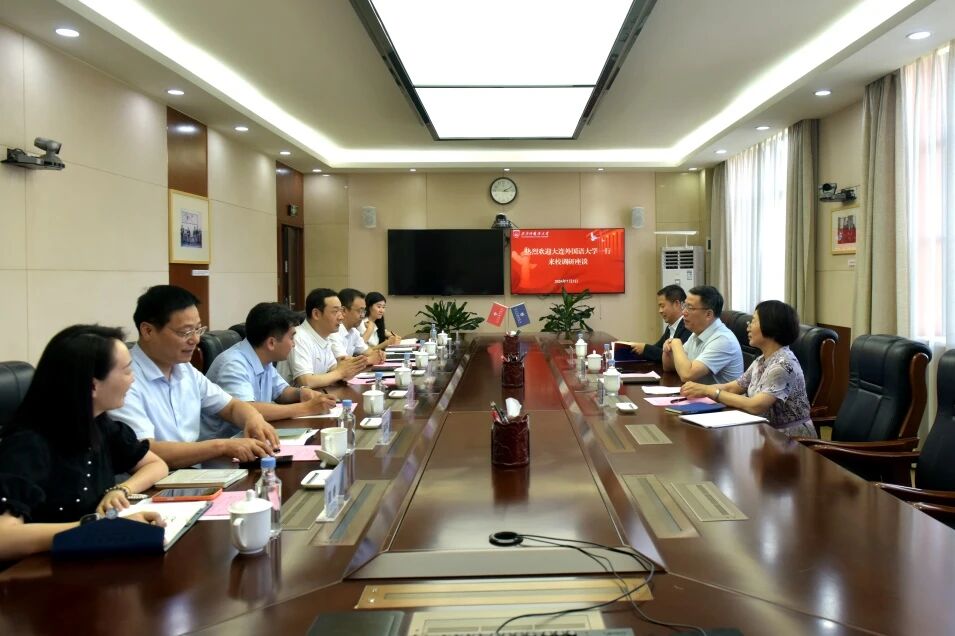
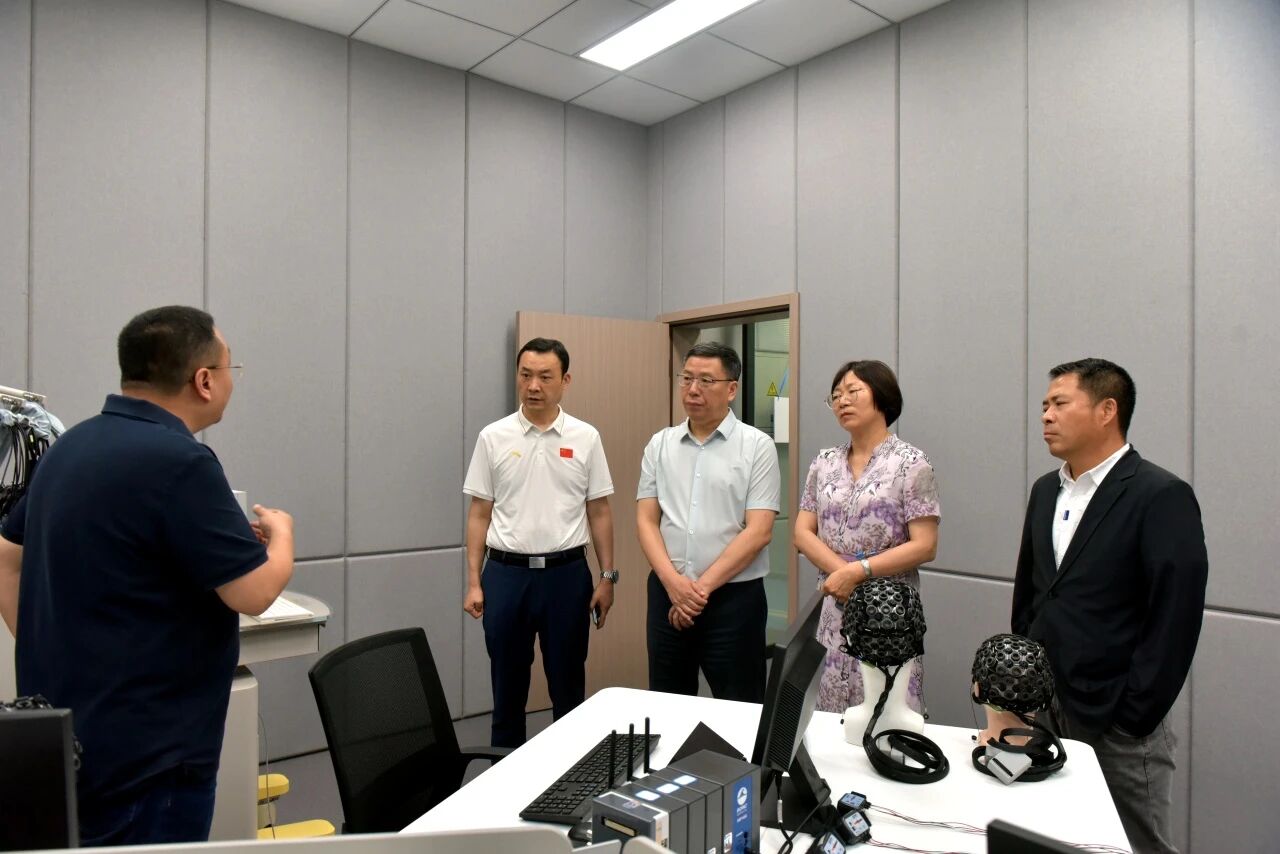
On the afternoon of July 2, Qian Yingwei and his delegation visited Beijing Foreign Studies University for a research forum. Li Hai, Party Secretary of Beijing Foreign Studies University, and Jia Wenjian, President of Beijing Foreign Studies University, received the delegation.
At the symposium, Jia Wenjian extended a warm welcome to the visitors. He mainly introduced BFSU’s educational positioning, development paths and key tasks for the 15th Five-Year Plan period. Focusing on the challenges brought by artificial intelligence, he elaborated on the university’s exploration and reflections in serving national strategies, promoting interdisciplinary integration, advancing regional and country studies, and reforming the talent cultivation model for global governance professionals.
Centered on the formulation of the 15th Five-Year Plan, this research tour mainly focused on the development of foreign language disciplines, training of interdisciplinary talents and faculty team building amid the artificial intelligence era. It offered valuable practical references for our university to identify its distinctive educational positioning based on existing resources, address development bottlenecks and clarify the roadmap for development in the 15th Five-Year Plan period.
Going forward, the university will translate research outcomes into concrete actions, fully draw on the advanced educational philosophies and experience of the two visited universities, and formulate a scientific 15th Five-Year Plan. It will proactively respond to national demands amid the great rejuvenation of the Chinese nation — namely the country’s need to deeply understand the world, effectively communicate China’s voice and participate in global governance — as well as the public’s contemporary demand for high-quality foreign language education amid technological revolution and social transformation. Prioritizing the dual core disciplines of Foreign Languages and Literatures plus Regional and Country Studies, the university will develop interdisciplinary research tracks including international communication, global governance, artificial intelligence and language technology. It will accomplish the transformation from a traditional foreign language institute to a new-type university of international studies, and strive to write a brand-new chapter in Dalian University of Foreign Languages’ development during the 15th Five-Year Plan period.



